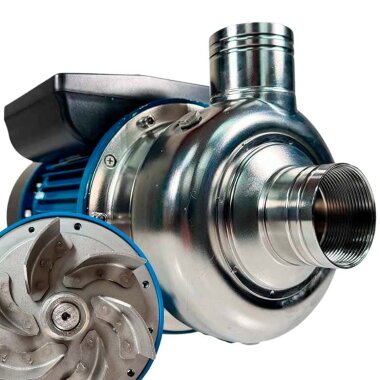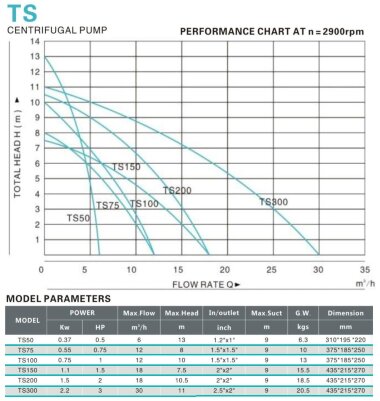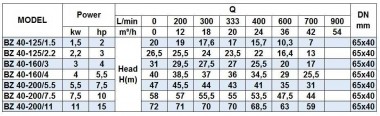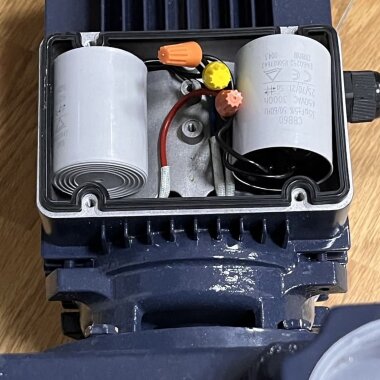


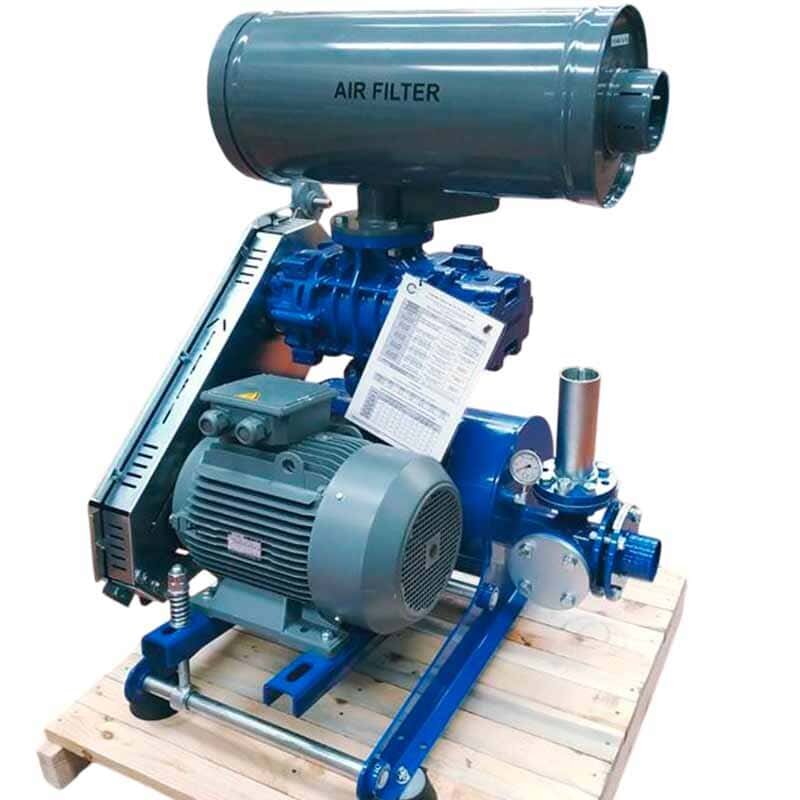
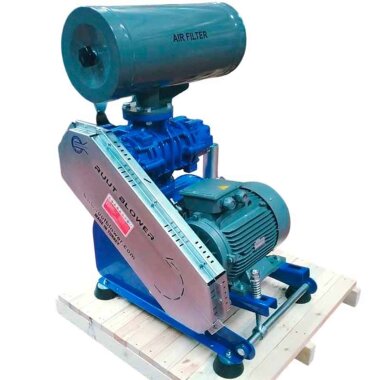
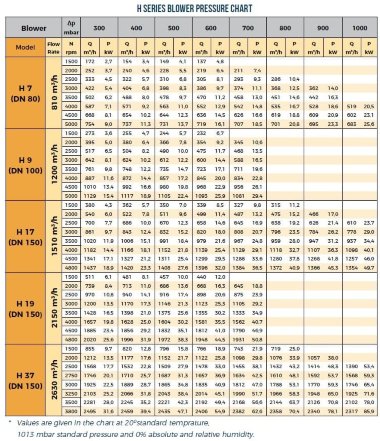
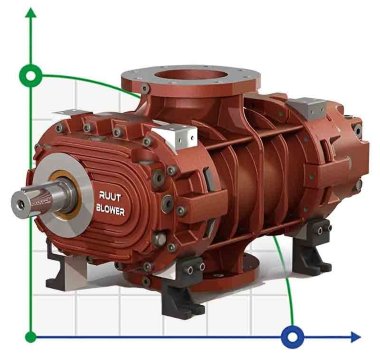
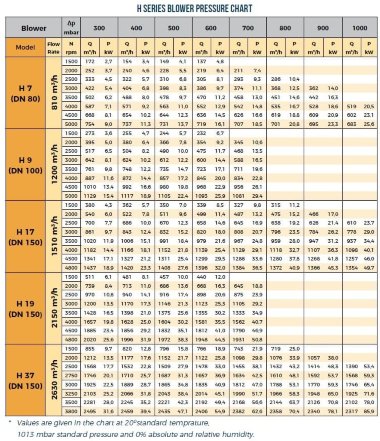
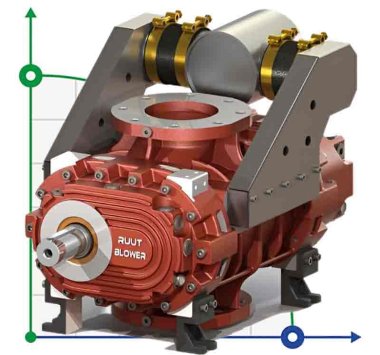
Blower RUUT BLOWER H37 (DN150/PN10), 1200 m3/h, 2100 rpm, with 37 kW motor, 380V, 50Hz, on frame


Products from the same category
1057322
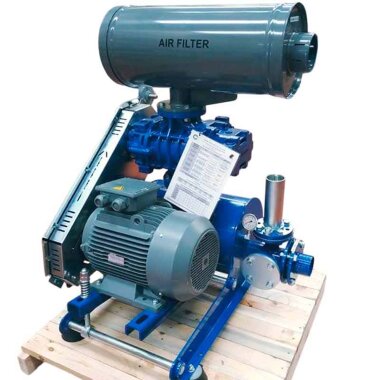
Blower RUUT BLOWER H37 (DN150/PN10), 1500 m3/h, 2500 rpm, with 45 kW motor, 380V, 50Hz, on frame
$15,371
Pre-order only
Description
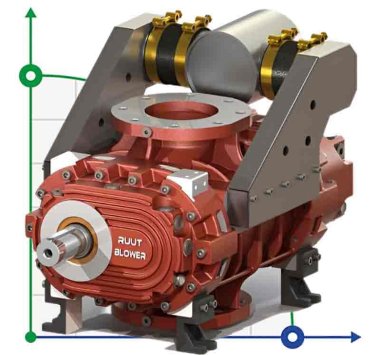
The blower kit includes a suction filter, discharge valve, check valve, safety valve, belt and pulley drive system and its protection, vibration mounts, pressure gauge, chassis and first oil fill.
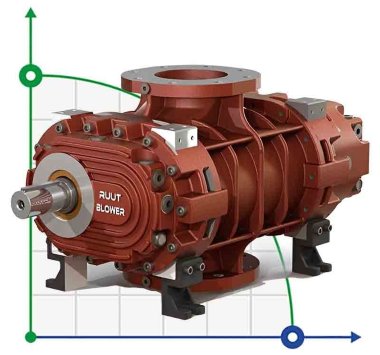
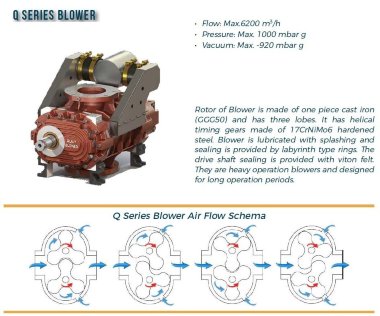
Principle of operation: air blowers consist of a pair of rotors rotating in a body of a certain shape with positive displacement. The movement of the rotors is synchronised by distribution gears located on the shafts. Therefore, there is no friction between the rotors, as well as between the rotors and the housing. During rotation, air is displaced by the gears and transferred to the pressure side. Air blowers transfer as much air as their volume during each rotation of the pump shaft. The power of the air blower depends on its operating speed and pressure conditions (resistance). Air blowers create pressure depending on the connected system resistance and can operate under pressure or vacuum.
Applications of the H series air blower:
- pneumatic transport of granular materials (pressure and vacuum)
- water purification process in treatment plants (pressure)
- ventilation of fish farm tanks (pressure)
- central dust and smoke extraction system (vacuum)
- sandblasting systems (pressure)
- drying systems (pressure)
- ventilation systems (pressure and vacuum)
Documentation Blower RUUT BLOWER H37 (DN150/PN10), 1200 m3/h, 2100 rpm, with 37 kW motor, 380V, 50Hz, on frame
Download instructions, catalog for Blower RUUT BLOWER H37 (DN150/PN10), 1200 m3/h, 2100 rpm, with 37 kW motor, 380V, 50Hz, on frame
Good price